
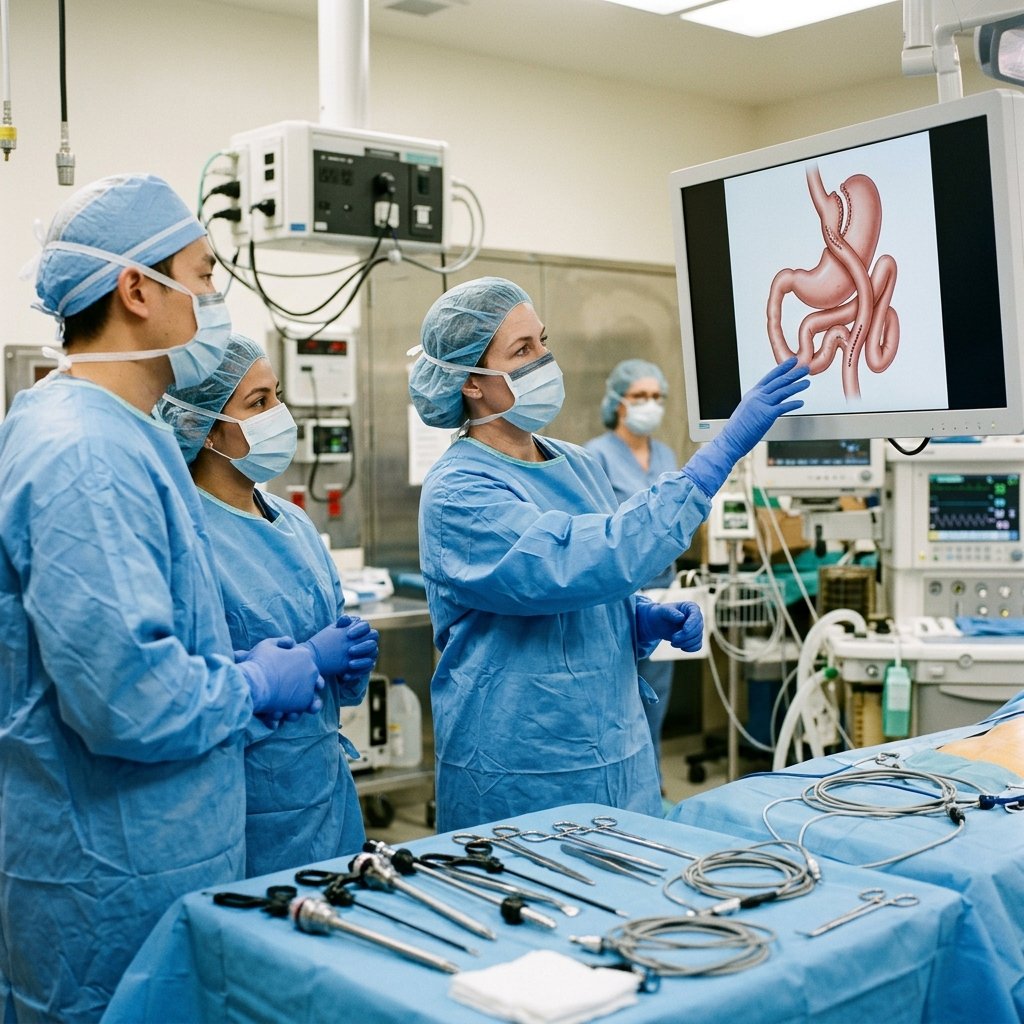
Revisional surgery (عمليات السمنة التصحيحية) is a second operation for people who have had weight-loss surgery before. It may be needed when the first operation no longer works as hoped, or when it has caused a problem. Needing a revision is more common than many people think, and it is not a personal failure. With careful tests and the right plan, most patients get back on track.
Who is it for?
Revisional surgery may help if one of the following has happened after an earlier sleeve, bypass, gastric band, vertical banded gastroplasty (VBG), or butterfly operation:
- You did not lose enough weight, or the weight came back.
- You have strong heartburn (reflux), which is common after a sleeve.
- You have a narrowed or twisted sleeve, frequent vomiting, or food sticking.
- You have problems from an old gastric band, such as slipping, pain, or poor results.
- Your type 2 diabetes has come back.
The most common revisions are:
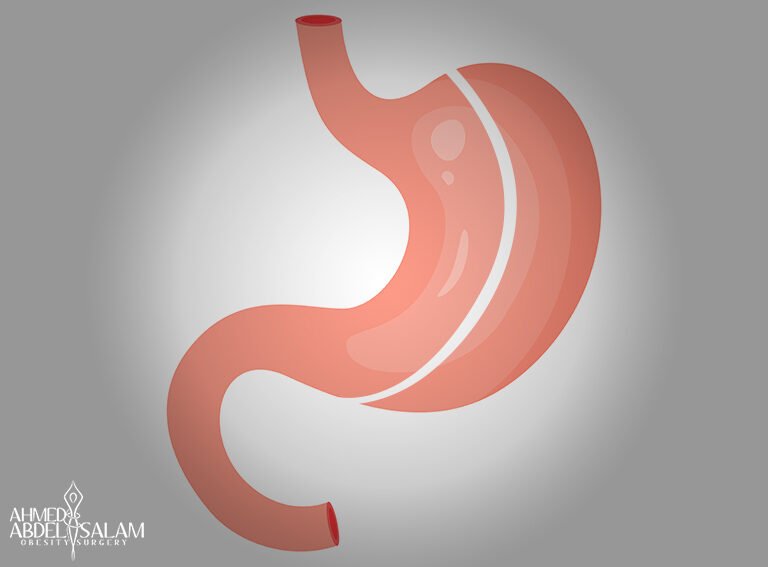
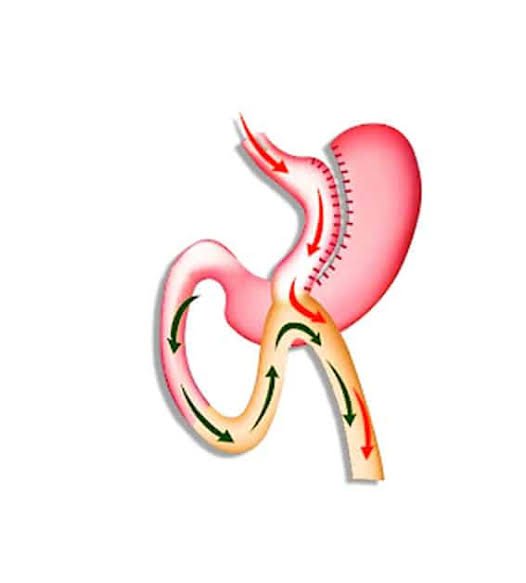
- Sleeve to Roux-en-Y gastric bypass: The best option for strong reflux after a sleeve, and it also helps with weight.
- Sleeve to SADI-S or one-anastomosis gastric bypass (OAGB): For more weight loss after a sleeve.
- Gastric band removal: With change to a sleeve or bypass, sometimes in two separate steps.
- Vertical banded gastroplasty (VBG, تدبيس المعدة) or the butterfly operation (عملية الفراشة): These older operations are still seen in Egypt and often lead to vomiting, food sticking, heartburn, or weight regain. They are either converted to a Roux-en-Y gastric bypass or reverted to the normal anatomy of the stomach.
- Correction of a narrowed or twisted sleeve: Or repairs after an earlier bypass.
How is it performed?
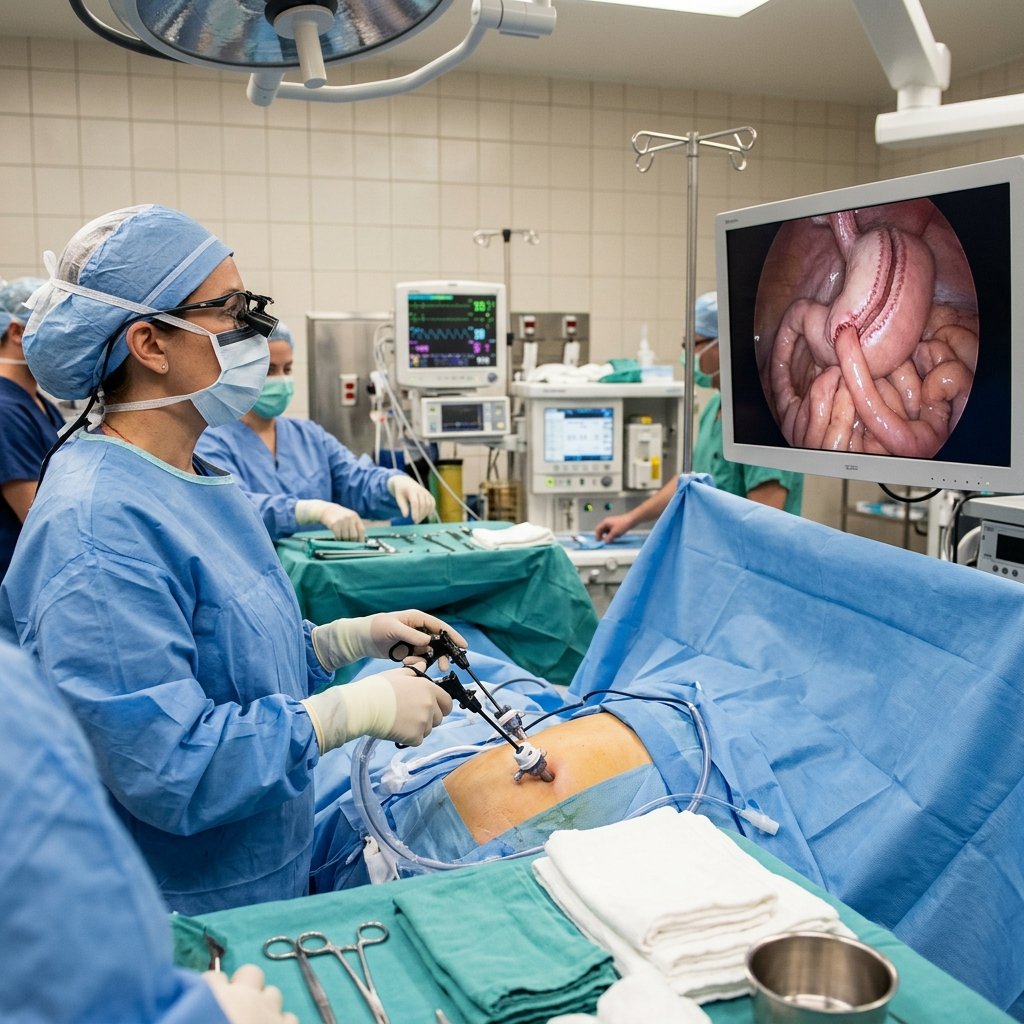
- Most revisions are done by keyhole surgery under general anesthesia. How long the operation takes varies from patient to patient, but it usually takes 2 hours or more, longer than a first operation, because scar tissue from the first operation must be freed carefully.
- Dr. Ahmed first finds the exact cause of the problem, then chooses the operation that fixes it.
- The new shape of the stomach and intestine depends on the chosen operation, as described on its own page.
- All joins and staple lines are tested for leaks before the operation ends.
Before surgery
- Detailed tests to understand your current anatomy: an upper endoscopy (a camera test of the stomach), and an X-ray with contrast or a CT scan.
- Bring the report of your previous operation if you have it. It helps us plan safely.
- Blood tests, including vitamin levels, and a visit with the anesthesia doctor.
- A session with our dietitian to review your eating habits. If your BMI is very high (over 60), you will also follow a low-calorie diet for 1 to 2 weeks before surgery.
- Stop smoking at least 4 to 6 weeks before surgery.
- Our Fast Track program prepares you before surgery and continues during and after it.
Recovery and follow-up
- You will walk within a few hours of surgery. Most patients stay in hospital for one night, sometimes longer depending on the operation.
- Your diet moves in steps over about six weeks, from fluids to normal meals.
- Your vitamins and blood tests depend on your new operation, and most patients need them for life. If you still have your gallbladder, you will also take a medicine that protects you from gallstones for the first 6 months.
- Follow-up is closer after a revision: visits at 1 week, 1 month, 3, 6, and 12 months, then twice a year, in the clinic or by video consultation.
What results can I expect?
Results depend on why the revision was needed. Heartburn after a sleeve usually improves a lot after changing to a gastric bypass, and food sticking improves once a narrowing or twist is corrected. Weight loss after a revision is real but is usually less than after a first operation, so healthy habits matter even more.
Benefits of Revisional Bariatric Surgery
- Restores the effectiveness of previous bariatric surgery
- Corrects complications from earlier procedures
- Promotes renewed weight loss
- Relieves symptoms such as severe reflux, persistent vomiting or dysphagia
What are the risks?
A revision carries more risk than a first operation, mainly because of scar tissue. We will explain your own risk in detail. The main risks are:
- A leak. Advanced staplers and surgical experience keep it rare, but the risk is higher than after a first operation because of scar tissue. If it happens, it shows within the first 7 to 10 days after surgery.
- Bleeding, which usually settles with close monitoring and treatment, without another operation.
- Injury to nearby organs while freeing scar tissue.
- A longer operation and hospital stay.
- The specific risks of the new operation, such as ulcers or vitamin shortages.
- Gallstones, if you still have your gallbladder. Fast weight loss and drinking too little water can cause them, and without prevention, about 25–30% of patients develop them. A protective medicine we prescribe for the first 6 months lowers this to about 5%, close to the usual rate in the general population.
- Blood clots in the legs or lungs. Walking early and blood-thinning injections lower this risk.
- Weight regain over the years. Regular follow-up with our nutrition team is the best way to prevent it.
Frequently asked questions
Is it my fault that I need a revision?
No. Many things affect long-term results, including how your body adapts over time. What matters now is finding the cause and choosing the right solution together.
Is a revision riskier than the first operation?
Yes, somewhat, because of scar tissue from the first operation. Careful planning and surgical experience keep this risk as low as possible.
How soon after my first operation can I have a revision?
If the reason is weight regain, we usually wait at least 18 to 24 months after the first operation and first try diet changes and medicines. Problems such as severe reflux or a narrowing can be treated sooner.
Can a revision be done by keyhole surgery?
In most cases, yes.
Which revision is best for me?
It depends on the cause. Strong reflux after a sleeve is usually best treated by changing to a gastric bypass, while weight regain may be treated with a bypass or SADI-S. We decide after your tests.
Why Choose Our Revisional Bariatric Surgery Program?
- Experienced bariatric and general surgeons
- Advanced minimally invasive surgical techniques
- Comprehensive preoperative assessment
- Personalized treatment plans
- Multidisciplinary care including nutritional support
- Modern surgical facilities
Related procedures
See all in: Bariatric Surgery in Cairo
Book your consultation
Call or WhatsApp +201000606733 · WhatsApp to book. Our clinics are open from 5 to 9 pm: Mohandessin on Sunday and Tuesday, New Cairo on Monday, and Sheikh Zayed on Wednesday. Video consultations are available if you live far away or abroad. Please bring any reports from your previous operation.
Medically reviewed by Dr. Ahmed Abdelsalam, Associate Professor of General and Laparoscopic Surgery, Kasr Al Ainy, Cairo University.