

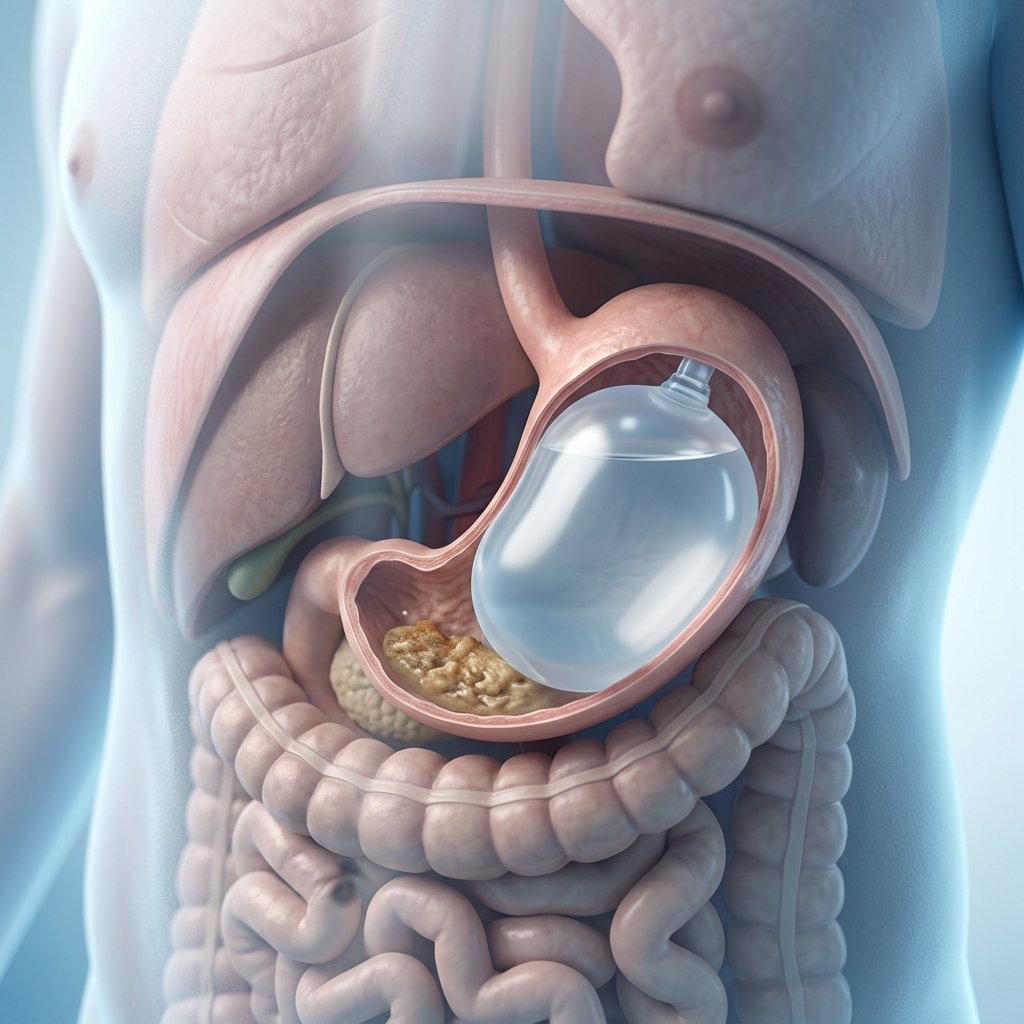
An intragastric balloon (بالون المعدة) is a soft silicone balloon placed inside your stomach through your mouth, using an endoscope: a thin, flexible tube with a camera. Once in place, it is filled with sterile salt water and takes up space in your stomach, so you feel full sooner and eat smaller portions. There are no cuts and no surgery, and the balloon is removed after 6 months.
Who is it for?
A balloon may be right for you if one of the following applies:
- Your body mass index (BMI) is 27 to 30 or above, and diet alone has not worked.
- You do not want, or are not ready for, an operation.
- Your weight is very high, and you need to lose some before surgery to make the operation safer.
A balloon is not suitable for everyone: for example, after previous stomach surgery, with a large hiatal hernia or an active stomach ulcer, or during pregnancy. We check this at your consultation and during the endoscopy.
How is it performed?
- You receive sedation, so you sleep lightly and feel nothing. The procedure takes about 20 to 30 minutes, with no cuts.
- The doctor first looks inside your stomach with the endoscope to make sure it is healthy.
- The empty balloon is passed through your mouth into your stomach and filled with 500 to 700 mL of sterile salt water. A harmless blue dye is often added to the water.
- You go home the same day, a few hours later.
- After 6 months, the balloon is emptied and removed the same way, under sedation.
Before the procedure
- A consultation, blood tests, and a session with our dietitian.
- No food or drink for 8 hours before the procedure.
- You will start a medicine that lowers stomach acid, and you will receive medicines to control nausea in the first days.
Recovery and follow-up
- The first 3 to 7 days are the hardest. Nausea, vomiting, and stomach cramps are common while your stomach gets used to the balloon. They usually settle with the medicines we give you.
- Your diet moves in steps: fluids for the first few days, soft food for about a week, and then healthy normal meals in small portions.
- You take the acid-lowering medicine every day while the balloon is in place.
- Regular visits with our dietitian, in the clinic or by video, help you build habits that last after the balloon is removed. The balloon is a tool; the new habits are what keep the weight off.
- If your urine turns blue or green, the balloon may be leaking. Call us the same day.
What results can I expect?
Most patients lose about 15 to 20 kg over 6 months. Keeping the weight off after removal depends on the eating and activity habits you build during the program. Without a healthy diet after the balloon is removed, about 70–80% of patients regain the weight.
Who May Benefit from an Intragastric Balloon?
- BMI of 27 to 30 and above
- Patients who have not reached their goal with diet and exercise
- Patients who prefer a non-surgical option
- Weight reduction before another operation
- Patients who are not yet candidates for surgery
- Patients able to follow a structured nutrition programme
What are the side effects and risks?
The balloon is generally safe, but side effects and risks include:
- Nausea, vomiting, and cramps in the first days (common).
- Heartburn (reflux) while the balloon is in place.
- A stomach ulcer, which is why the acid-lowering medicine matters.
- The balloon losing its water. An empty balloon can move into the intestine and, rarely, cause a blockage that needs removal.
- Rare problems, such as inflammation of the pancreas or a tear in the stomach wall.
- Early removal, for the few patients who cannot tolerate the balloon.
Frequently asked questions
Is a gastric balloon an operation?
No. There are no cuts. The balloon is placed and removed through your mouth with an endoscope, under light sedation.
Does it hurt?
You feel nothing during the procedure. The first few days can be uncomfortable, with nausea and cramps, but medicines help, and it soon settles.
How long does the balloon stay in?
About 6 months. Then it is removed under sedation.
Can I eat normally with a balloon?
You will eat smaller portions and feel full sooner. Our dietitian will guide you on what to eat and what to avoid.
What happens after the balloon is removed?
The habits you build during the program help you keep the weight off. If needed, we can discuss other options, such as medicines or surgery.
Why Choose Our Intragastric Balloon Program?
- Day-case procedure under sedation
- Experienced endoscopy team
- Medication to control nausea and acidity
- Dietitian-led follow-up throughout treatment
- Planned removal at the end of the programme
- Support for maintaining weight loss afterwards
Guides and costs
Related procedures

See all in: Non-Surgical Weight Loss
Book your consultation
Call or WhatsApp +201000606733 · WhatsApp to book. Our clinics are open from 5 to 9 pm: Mohandessin on Sunday and Tuesday, New Cairo on Monday, and Sheikh Zayed on Wednesday. Video consultations are available if you live far away or abroad.
Medically reviewed by Dr. Ahmed Abdelsalam, Associate Professor of General and Laparoscopic Surgery, Kasr Al Ainy, Cairo University.