

A hernia is a bulge through a weak spot in the muscle wall. This section brings together Dr. Ahmed Abdelsalam’s pages on hernia and abdominal wall surgery: choose your type of hernia below.
Types of hernia Dr. Ahmed repairs
- Groin (inguinal) hernia: a bulge in the groin, much more common in men.
- Ventral hernia: a bulge through a weak spot in the front of the abdomen: at the belly button (umbilical hernia), above it (epigastric hernia), or through the scar of an earlier operation (incisional hernia).
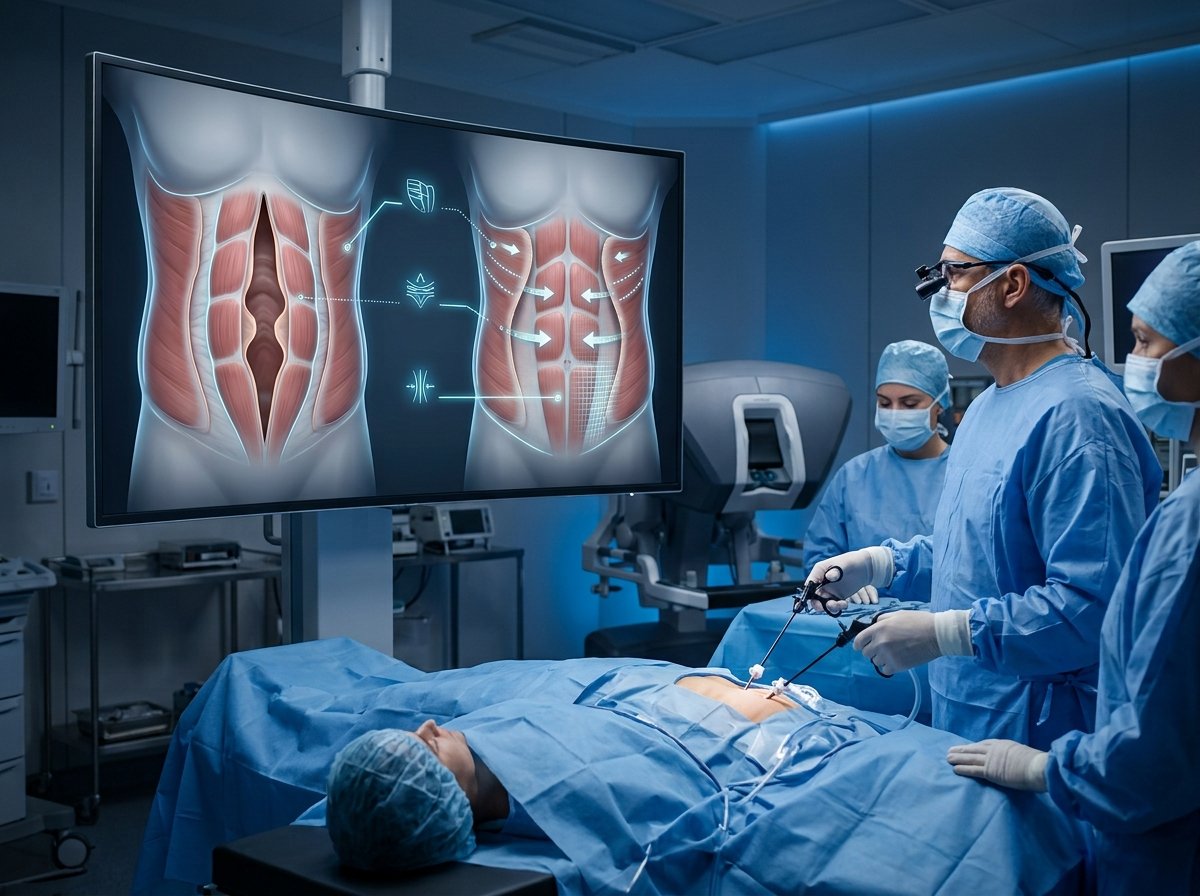
- Large or recurrent hernias: hernias that are wide or came back after an earlier repair; for these, abdominal wall reconstruction releases and moves the muscle layers to close wide gaps.
- Hiatal hernia: part of the stomach slides up through the diaphragm into the chest, often causing heartburn. It is treated in the Esophagus & Stomach section.
Robotic hernia repair
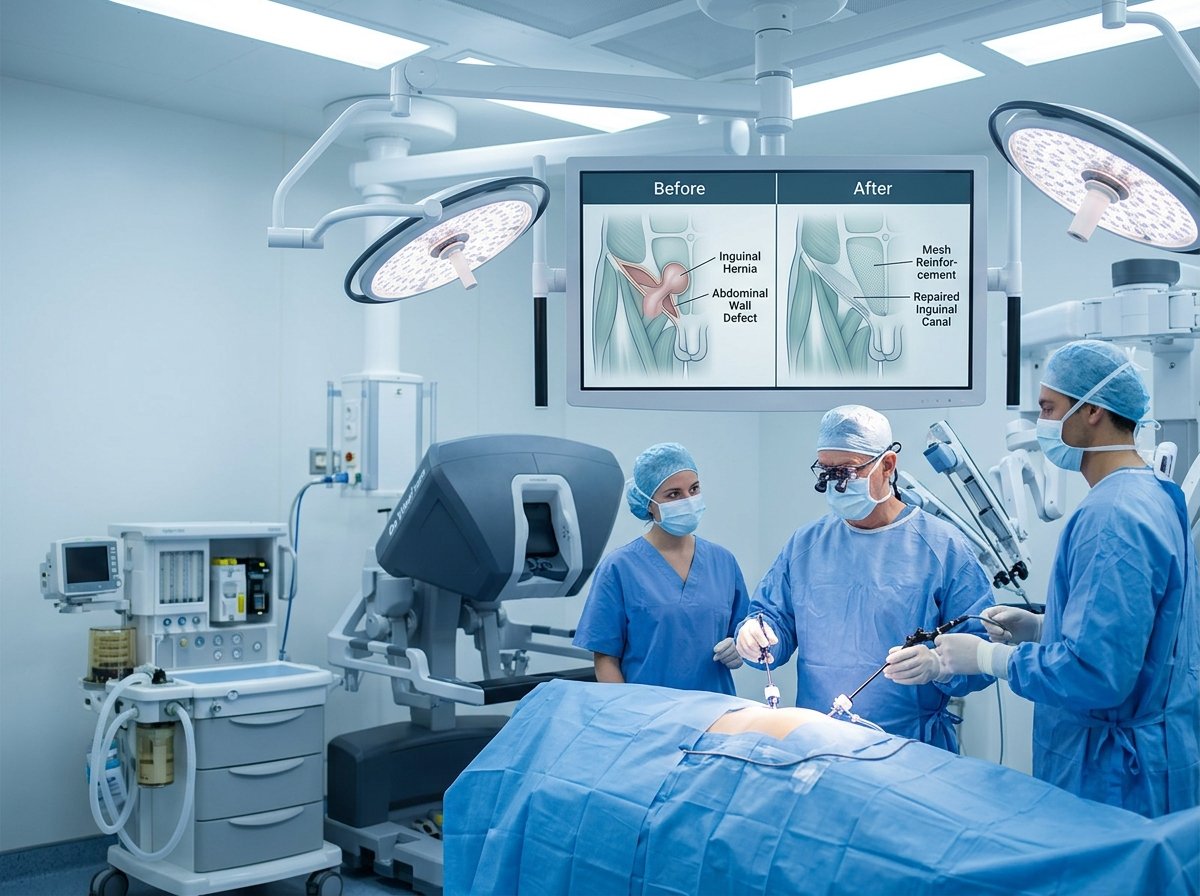
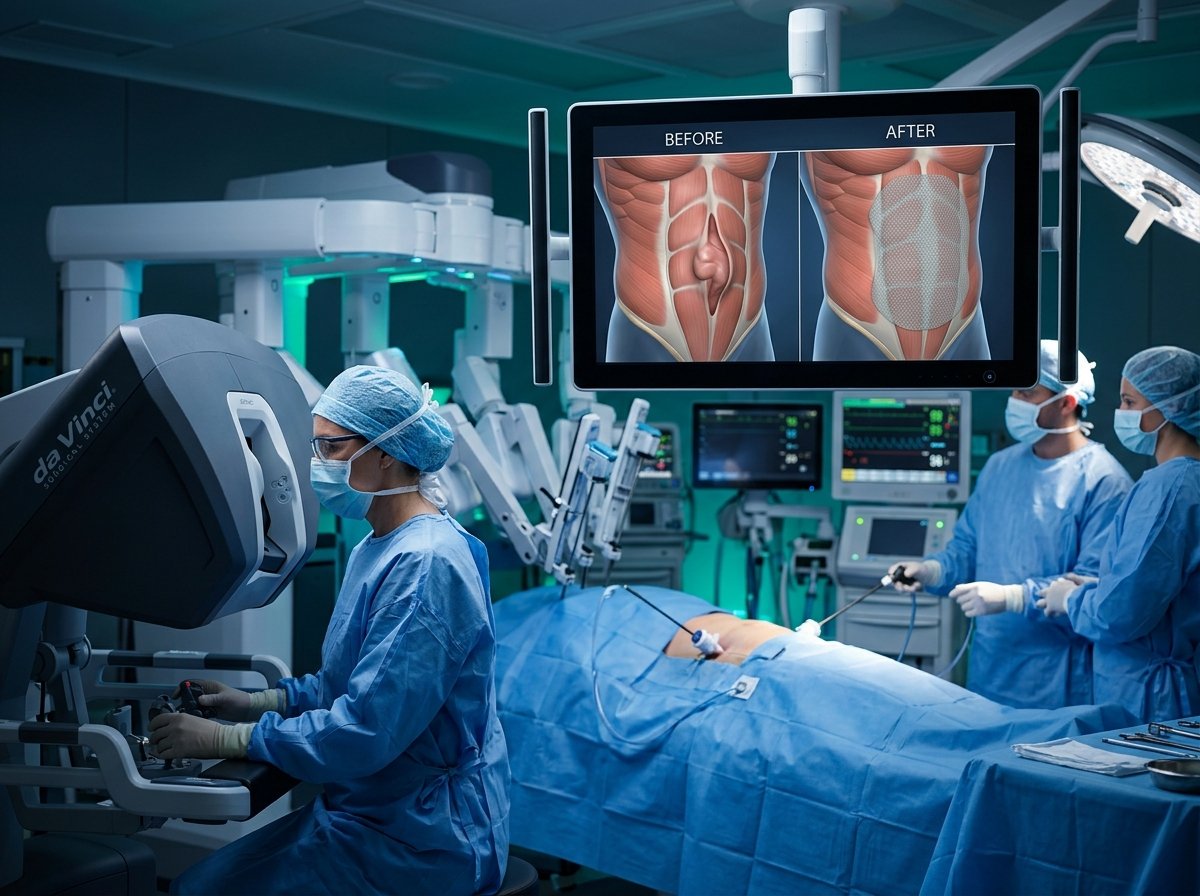
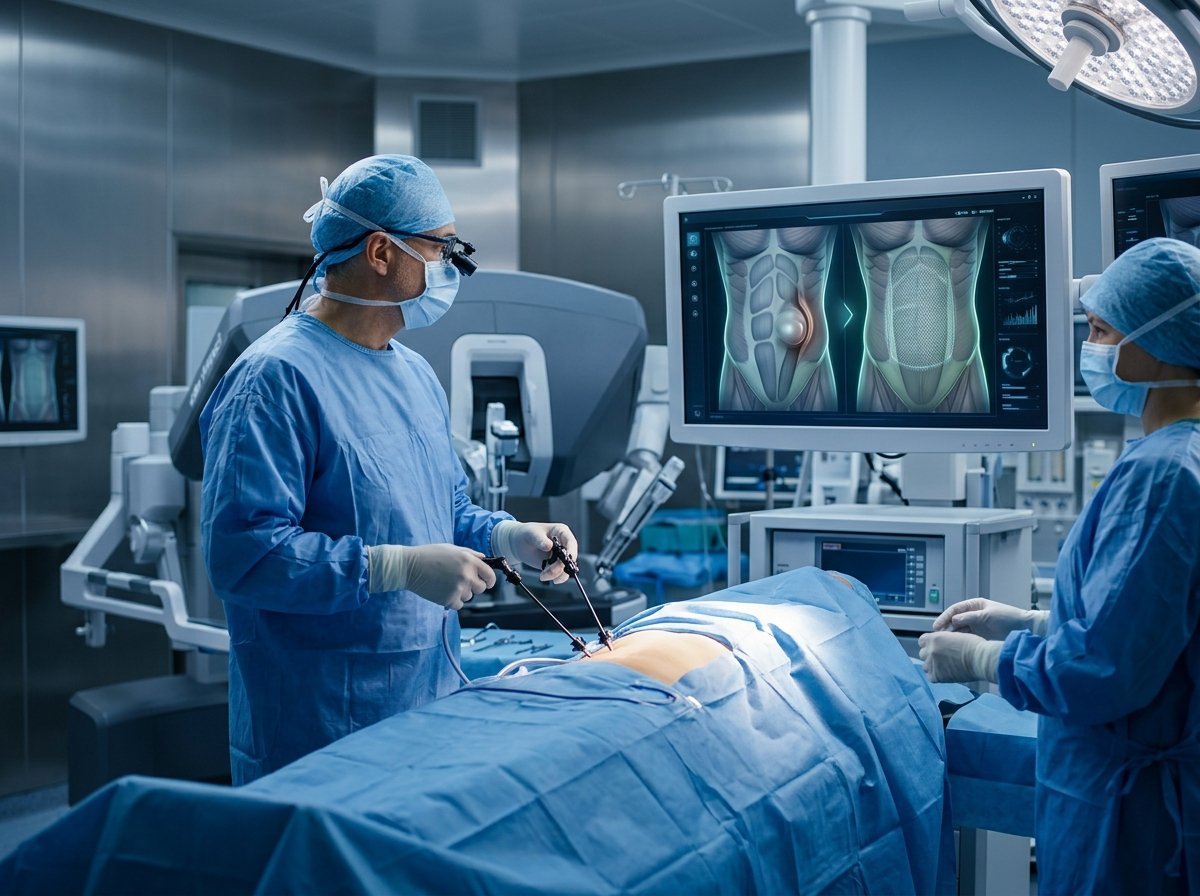
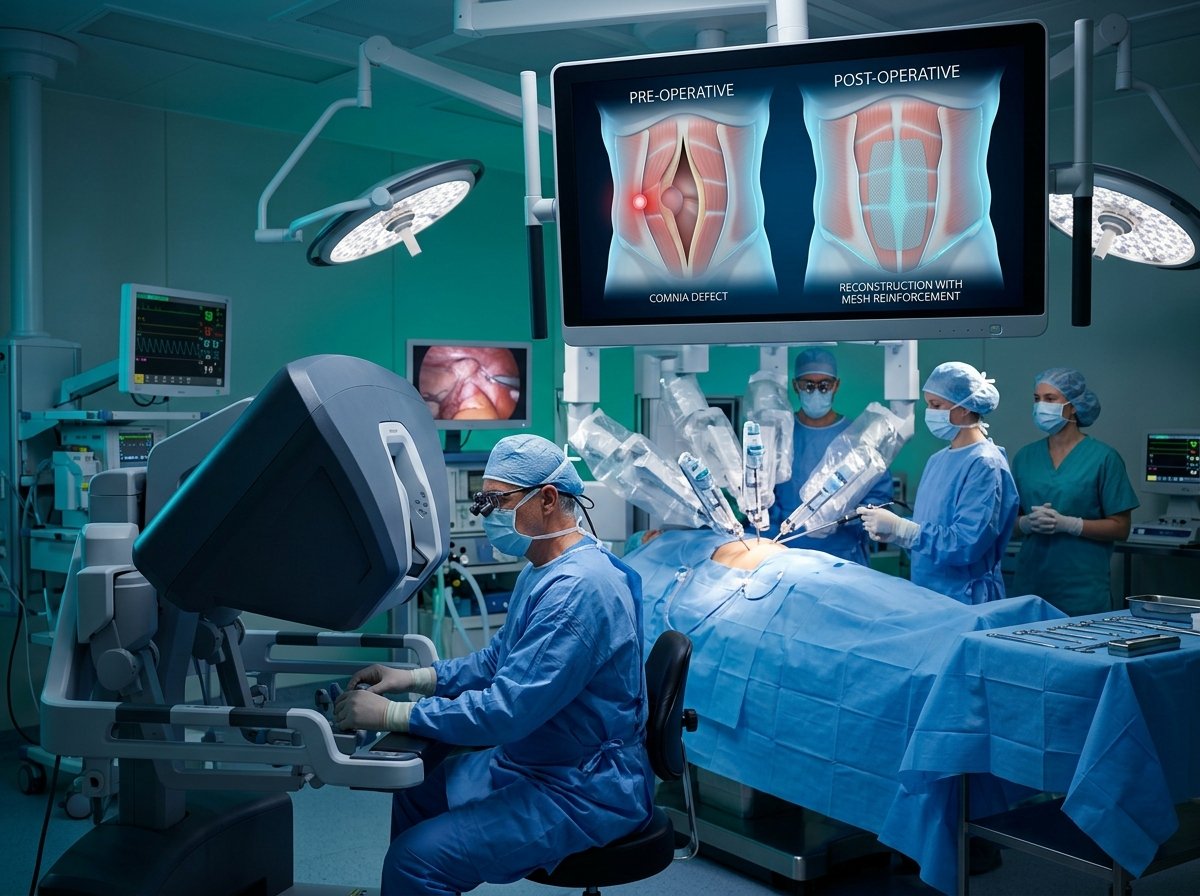
Dr. Ahmed performs ventral and groin hernia repair robotically at Cleopatra Hospitals.
- Groin hernia: the mesh is placed from the inside, behind the groin muscles, through 3 small cuts. Dr. Ahmed uses both main techniques, TAPP and TEP, and chooses the one that suits your hernia. Hernias on both sides can be repaired through the same cuts.
- Ventral hernia: Dr. Ahmed closes the gap in the muscle with stitches and places the mesh between the layers of the abdominal wall, away from the bowel (the eTEP technique).
- Large or recurrent hernias: the robot allows abdominal wall reconstruction without a long open cut.
- Hospital stay: usually the same day or the next morning for a groin hernia; usually one night for a ventral hernia, or 2 to 3 nights after abdominal wall reconstruction. Return to work is often within a week.
Full details are on the Robotic Surgery page.
Book Your Consultation
Mohandessin | Sheikh Zayed | New Cairo. Call / WhatsApp: +201000606733 · WhatsApp