

Quick answer
A PCA pump is a small pump that gives you a low, steady dose of painkiller all the time, and lets you give yourself an extra dose by pressing a button. PCA stands for patient-controlled analgesia, and it is used in the first hours after an operation as an extra layer of pain relief. In Dr. Ahmed’s Fast Track program, the pump adds to the other ways we control pain; it does not replace them.
How is pain controlled after surgery with Dr. Ahmed?
Good pain control after surgery does not depend on one strong medicine. Fast Track is our program for the whole journey, from preparation before the operation to recovery after it, and pain relief is a central part of it.
- Several medicines working together. We use what doctors call multimodal pain relief: a combination of medicines, each acting on pain in a different way. Together they work better than any one of them alone, so you need fewer strong painkillers.
- Local anaesthetic at each cut. During the operation, local anaesthetic is injected at each small cut. This numbs the area and reduces pain when you wake up.
- A pain pump when needed. If extra pain relief is needed, some patients use a pain pump (patient-controlled analgesia, or PCA), which gives a small, steady dose all the time and lets them give themselves an extra, safe dose by pressing a button.
With the Fast Track program, patients usually have less pain and nausea, get out of bed within hours, and go home after one night. We also avoid routine drains and urinary catheters, which makes moving around easier.
Good pain control after surgery is not only about comfort. When pain is under control, you can breathe deeply, cough, and get out of bed early. This helps protect your chest and lowers the risk of blood clots in the legs.
What is a PCA, and how do I use it?
Patient-controlled analgesia means that, on top of a small, steady dose the pump gives on its own, you decide when to take an extra dose, within safe limits that the anaesthetist (the doctor responsible for your anaesthesia and pain relief) has set in advance.
The pump is connected to the drip in your arm. You hold a small handset with a button.
How does a PCA pump work?
- The pump works on its own: it gives very small doses of painkiller continuously, around the clock. This keeps a low but steady level of painkiller in your blood, without ups and downs.
- If you still feel pain, press the button once for an extra dose. It starts to work within a few minutes.
- If the pain continues after a few minutes, you can press again.
- If you press too soon after the last extra dose, the pump gives nothing extra. This is a built-in safety feature called the lockout time.
One important rule: only you should press the button. Family members and visitors should never press it for you, even if you are asleep. This is part of what keeps the PCA safe: the steady dose is low, and if you become too sleepy, you will not press the button for extra doses.
A useful tip: press the button a few minutes before something you know will hurt, such as getting out of bed or coughing.
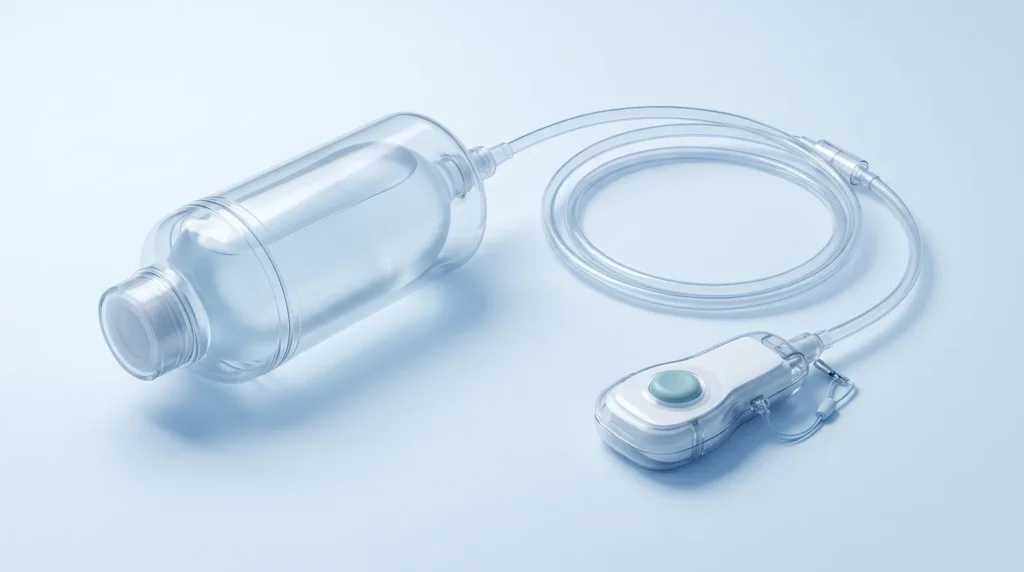
What medicine is inside the pump?
The pump contains a strong painkiller in small, safe doses, set by the anaesthetist. The medicine and the settings are chosen for each patient, according to their age, weight, general health and the type of operation.
The pump is filled and set before it reaches you. Neither you nor your visitors can change the dose or how often it can be given.
How long does it stay, and how do I know it is working or empty?
How long it stays. The pump usually stays for about the first 24 hours after surgery, or until you can manage your pain with tablets by mouth. A nurse or a member of the anaesthesia team removes it; this is quick and painless.
How to tell it is working. The pump we use is a disposable balloon pump, with no screen. Because it gives medicine continuously, the balloon inside it gets smaller slowly and steadily. After you press the button, the pump needs a short time to refill before the next extra dose is ready; on most of these pumps you can see or feel the button rise again. The best sign is that your pain stays under control and eases within a few minutes of pressing. Our nurses also check the pump regularly.
How to tell it is empty. When the medicine is finished, the balloon is completely flat: the pump stops giving medicine, and pressing the button no longer gives an extra dose.
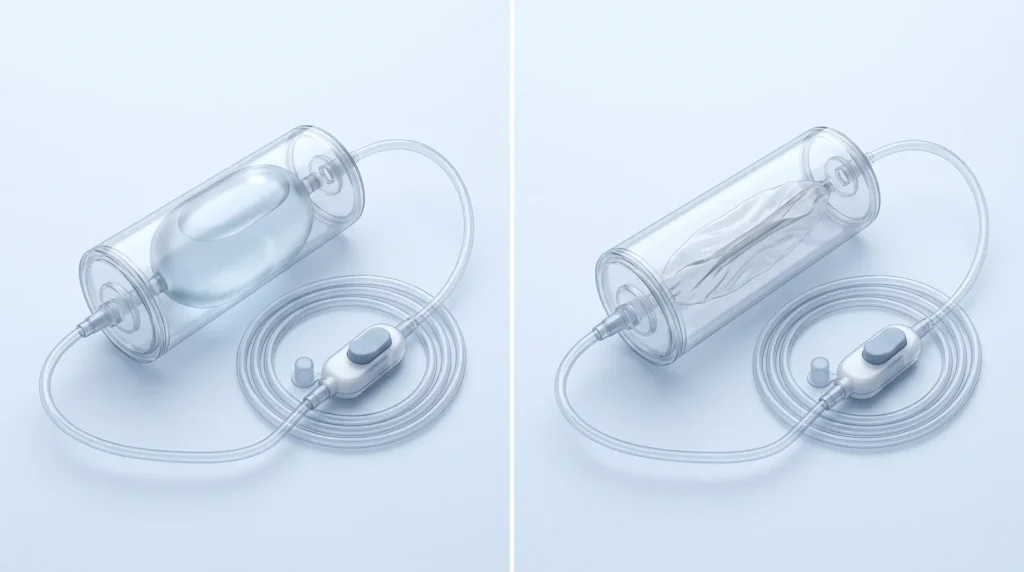
If the pump alarms or looks empty, tell the nurse. Do not try to adjust or disconnect it yourself.
PCA vs TAP block: what is the difference?
A TAP block (transversus abdominis plane block) is an injection of local anaesthetic between the muscle layers of the abdominal wall, usually guided by ultrasound. It numbs the nerves that supply the skin and muscles of the abdomen. It is given once, in the operating theatre, and its effect lasts several hours. There is no button to press.
A PCA, on the other hand, gives medicine through the drip continuously, works on pain in general, and lets you add an extra dose whenever you need it.
The two are not competitors: they can be used together, each doing a different job. We use a TAP block for selected patients, decided together with the anaesthetist.
PCA pump side effects and when to call the nurse
Most PCA pump side effects are mild and settle with simple treatment. The most common are:
- Nausea or vomiting
- Drowsiness
- Itching
- Constipation
- Dizziness
Less commonly, the medicine can slow your breathing. This is why the dose is limited and why the nurses watch you closely while the pump is in place.
Call the nurse (or our team, if you are at home) straight away if:
- You (or the patient) are very sleepy or hard to wake. Visitors should call the nurse and must not press the button.
- Breathing seems slow or shallow.
- Your pain is not controlled even after pressing the button.
- Nausea or vomiting is severe.
- You feel confused, or itching is severe.
- The pump alarms, or the drip site is swollen, painful or leaking.
Cost of the pump
The cost depends on the individual case: the type of operation, the hospital and whether a pump is needed at all. We explain the cost clearly at your consultation, so you know what to expect before your operation.
Frequently asked questions
Can the PCA pump be used more than once?
During your stay, yes: you can press the button as often as you need, and the pump’s safety limits decide when a dose is given. The pump’s tubing and medicine, however, are for one patient only and are not reused, for hygiene and safety.
Will I feel pain if I do not press the button?
Usually not much. The pump gives a small, steady dose on its own all the time, so the level of painkiller in your blood stays constant even if you never press. Your other painkillers and the local anaesthetic keep working too. The button is for extra relief: if you feel pain, press it and do not wait for the pain to become strong, because pain is easier to control early.
Can I go home with the pump?
Yes. Because Fast Track patients usually go home after one night, many leave with the pump still working, and it keeps giving pain relief at home. Before you leave, we explain how to look after it, what to watch for, and how it will be removed once it is empty. If anything worries you at home, call our team; our line is open 24 hours.
Is the PCA used after a sleeve, a bypass and a hernia repair?
It can be used after any of these operations when extra pain relief is needed. Many of our Fast Track patients do not need it, because the other methods control pain well. The decision is made for each patient together with the anaesthetist.
If you are planning an operation and want to know how we will keep you comfortable, book a consultation with Dr. Ahmed.
Book your consultation
- Phone and WhatsApp (all clinics): +201000606733 · +201211152111 · WhatsApp
- Clinic hours, 5 to 9 pm: Mohandessin on Sunday and Tuesday · New Cairo on Monday · Sheikh Zayed on Wednesday
- Video consultations are available if you live far away or abroad, and our phone line is open 24/7.
Medically reviewed by Dr. Ahmed Abdelsalam, Associate Professor of General and Laparoscopic Surgery, Kasr Al Ainy, Cairo University, on 14 November 2026.